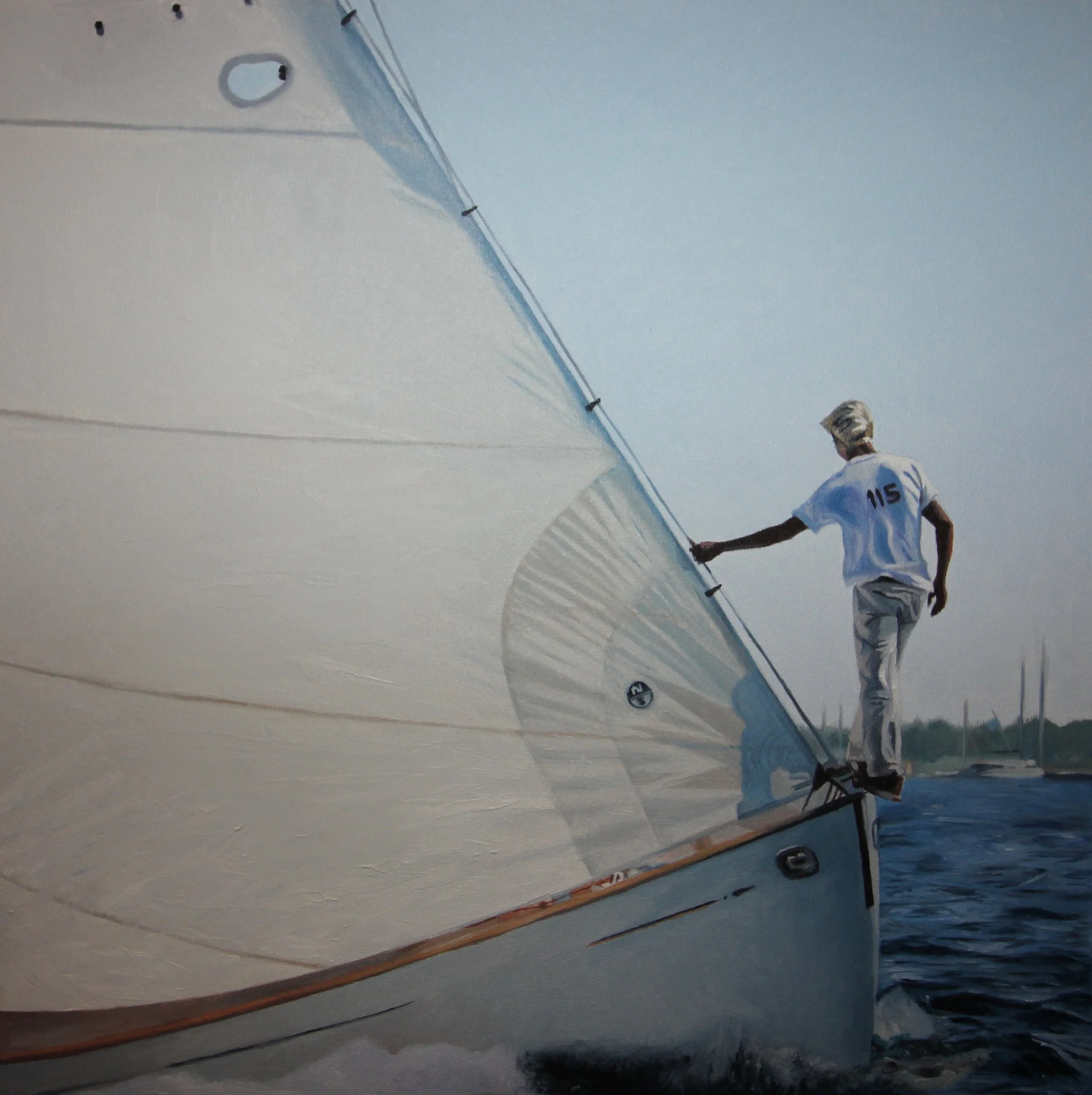
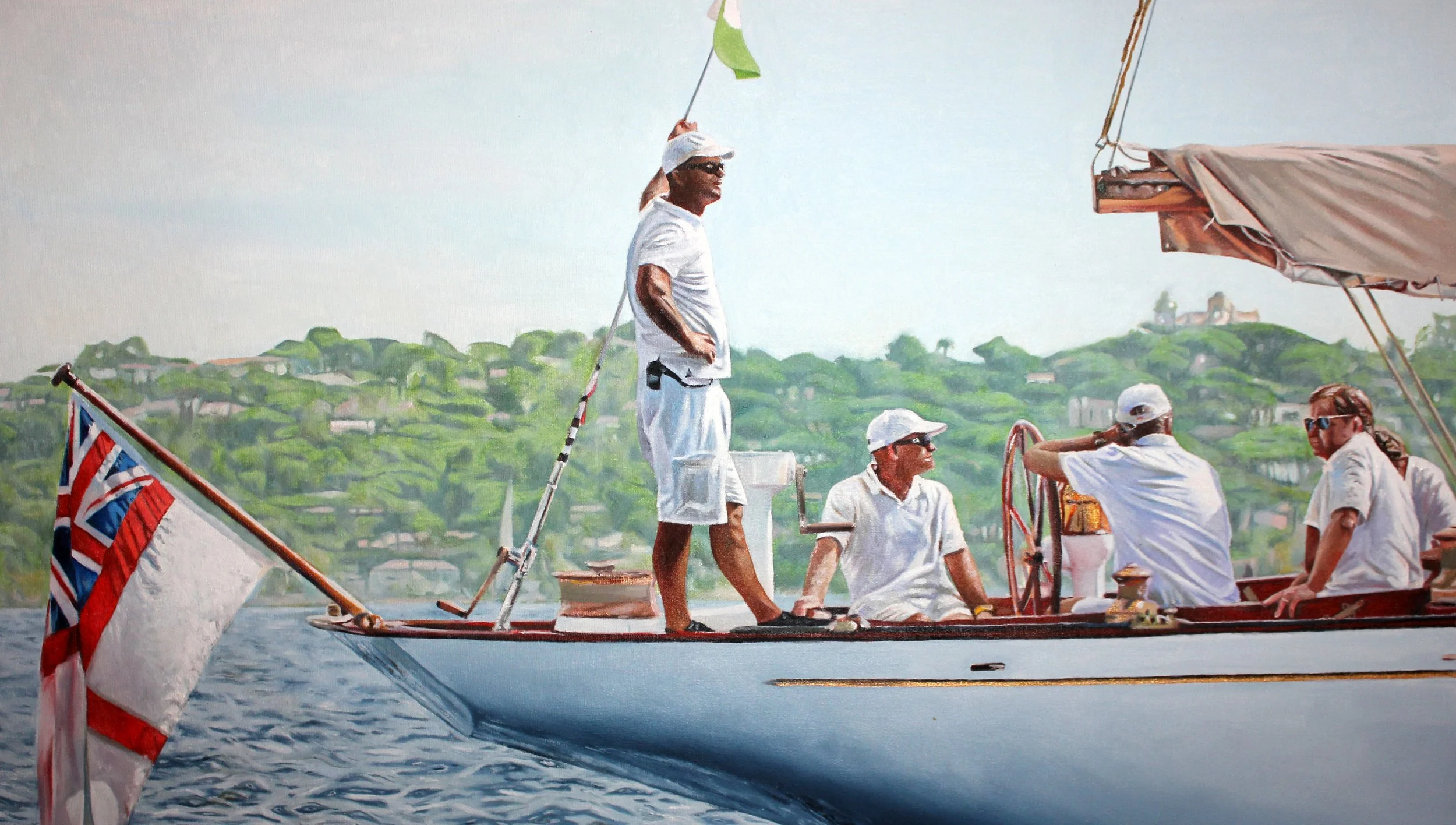
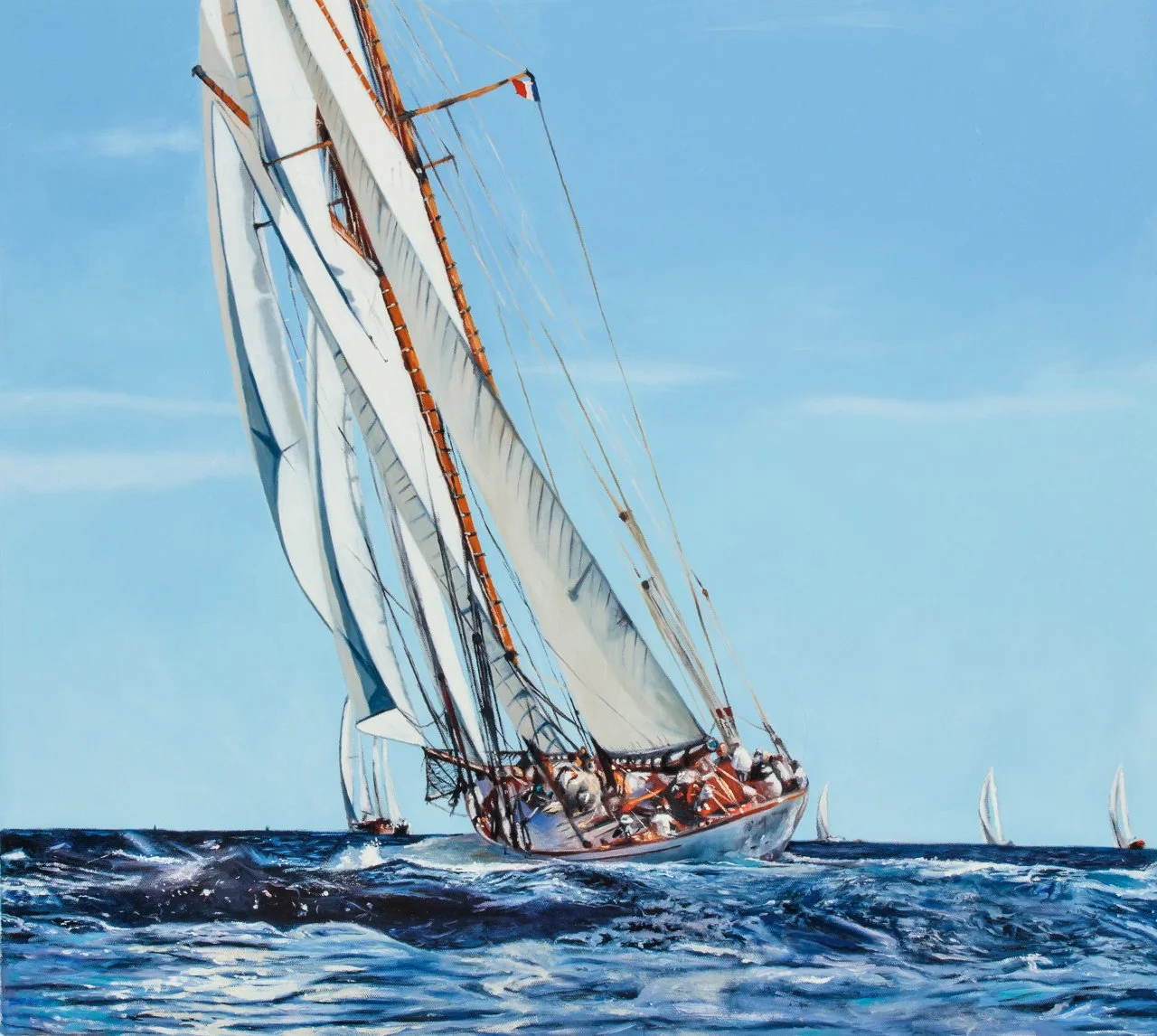
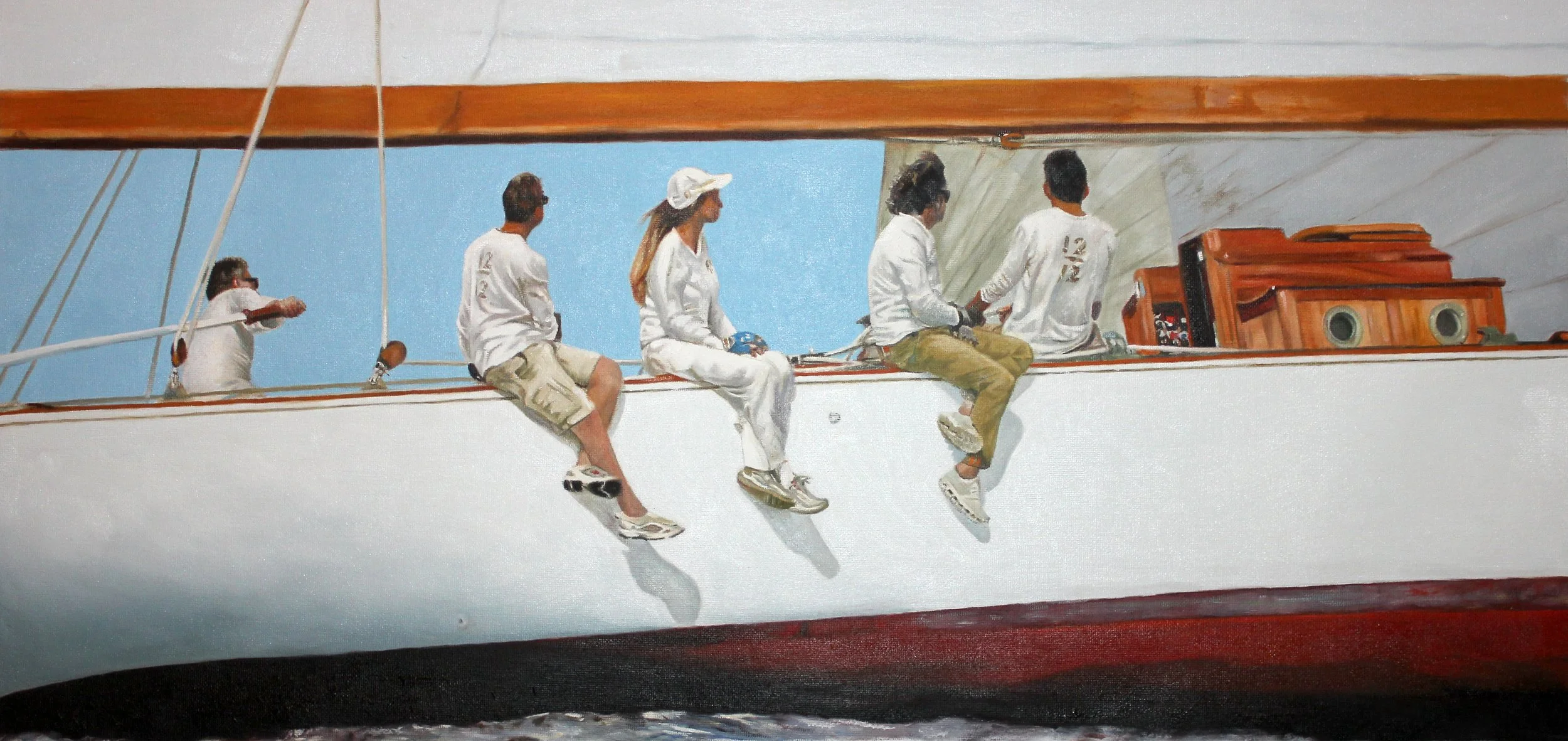
The Marine Series emerged when I allowed myself to break free from highly polished, meticulously layered work.
These paintings come from a very different energy, born out of action, immediacy, and the raw experience of being on the water.
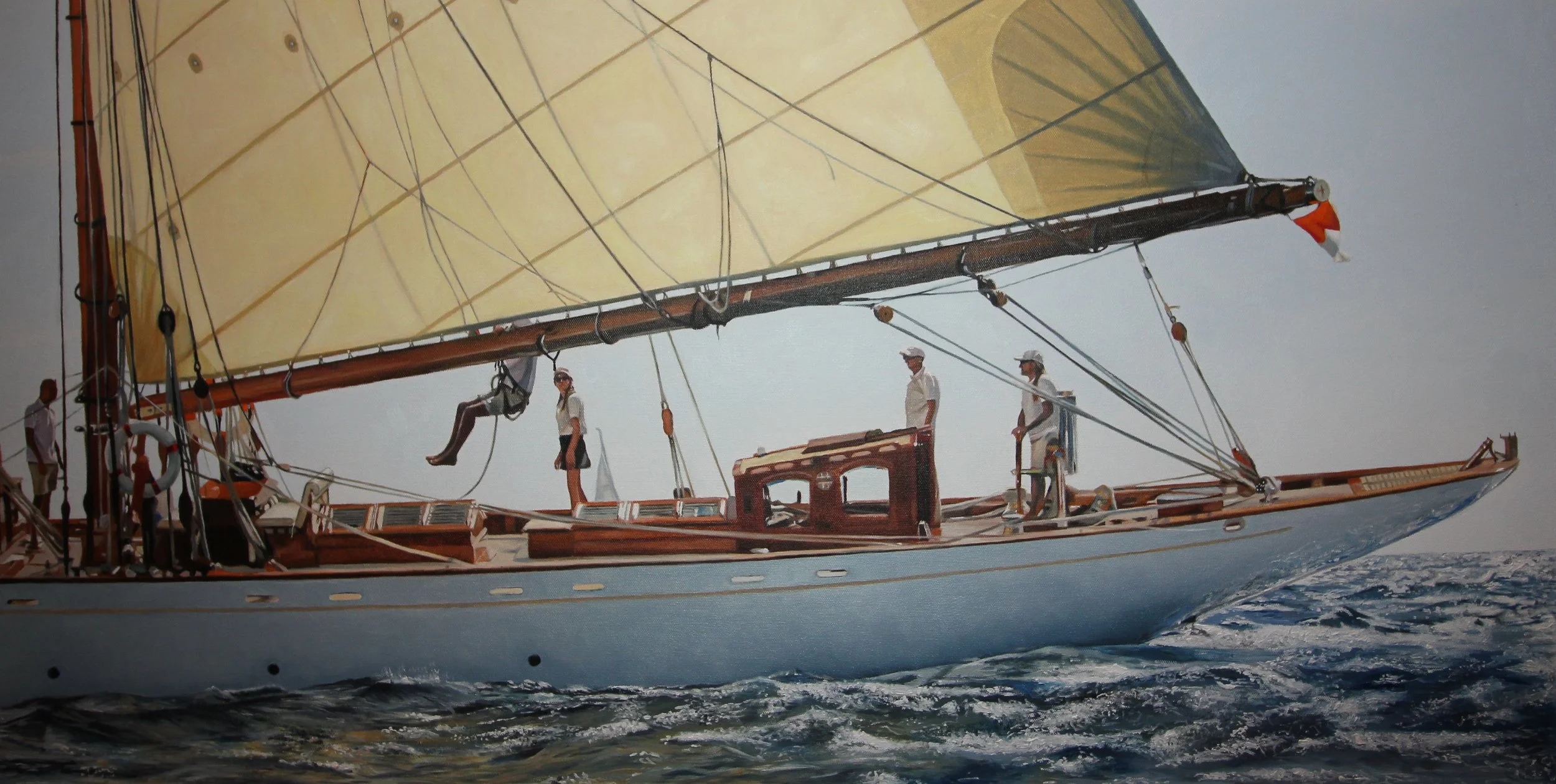
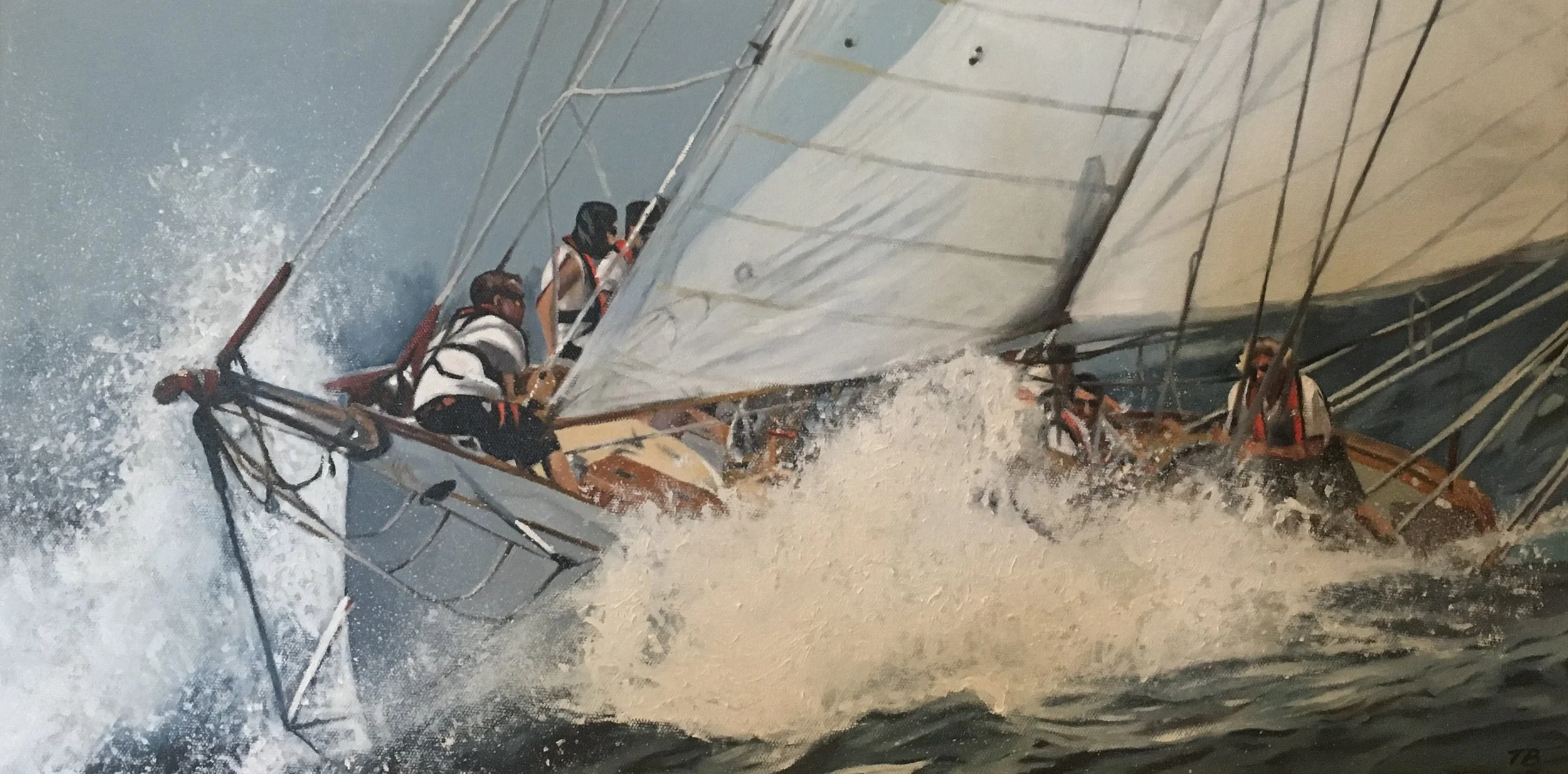
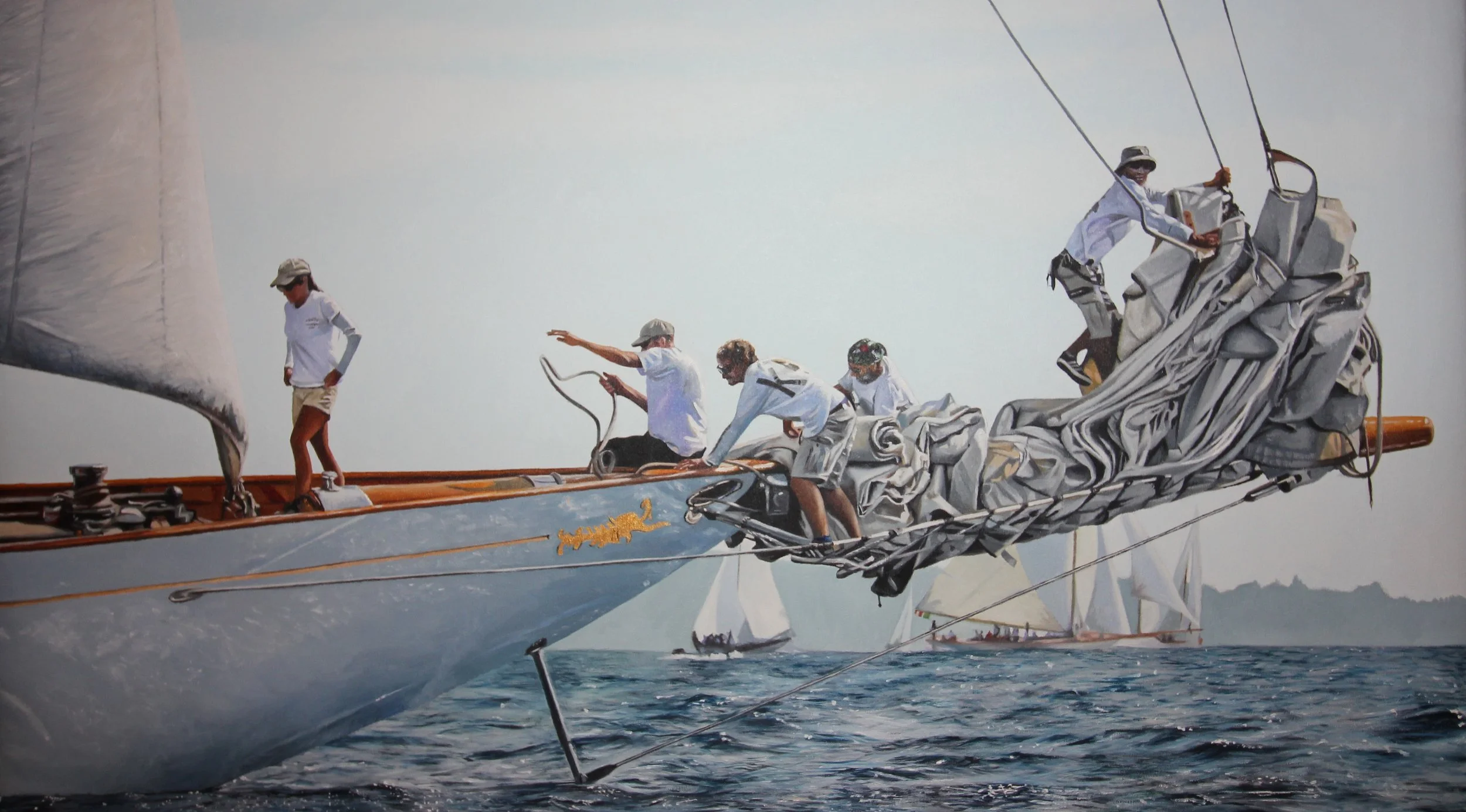
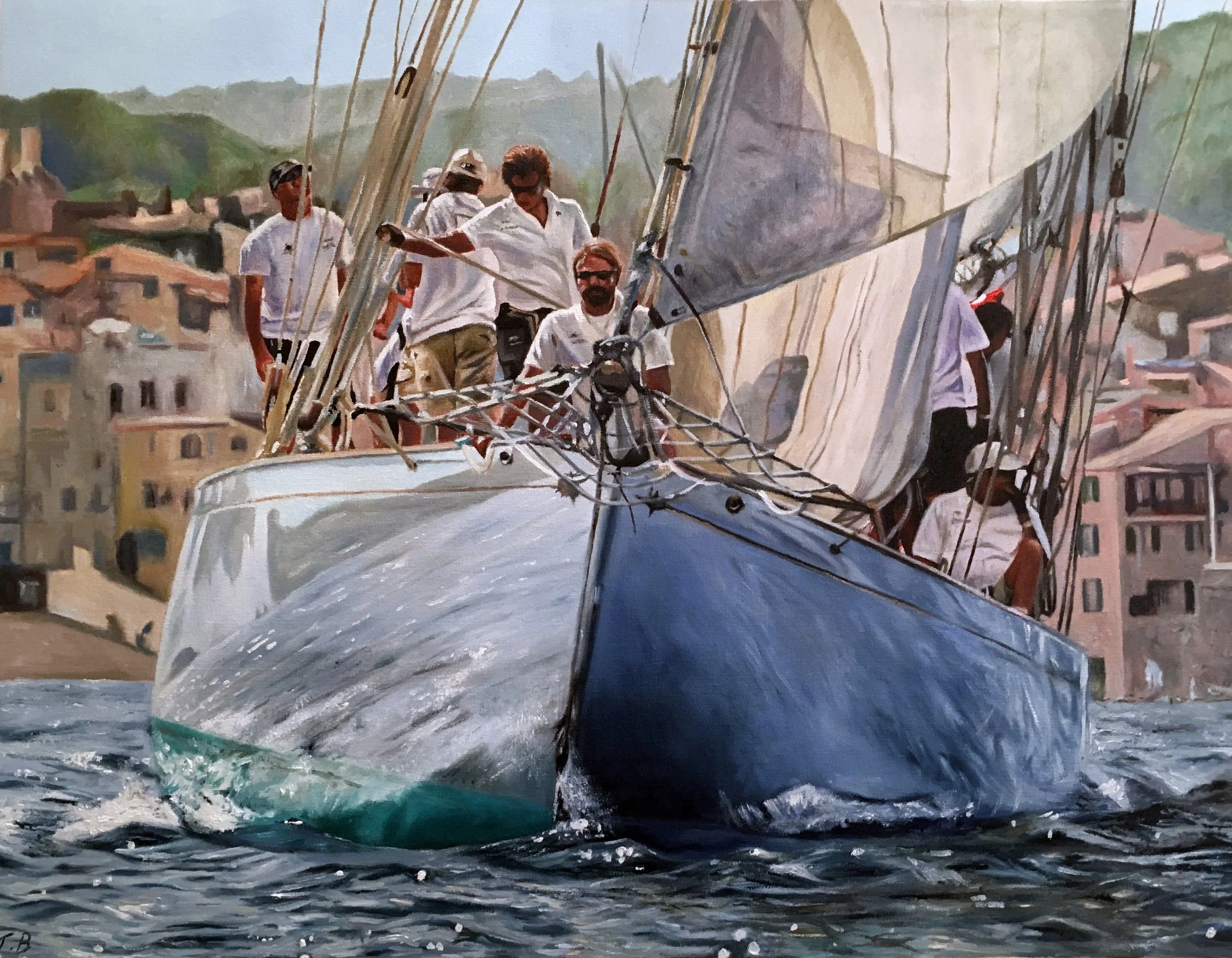
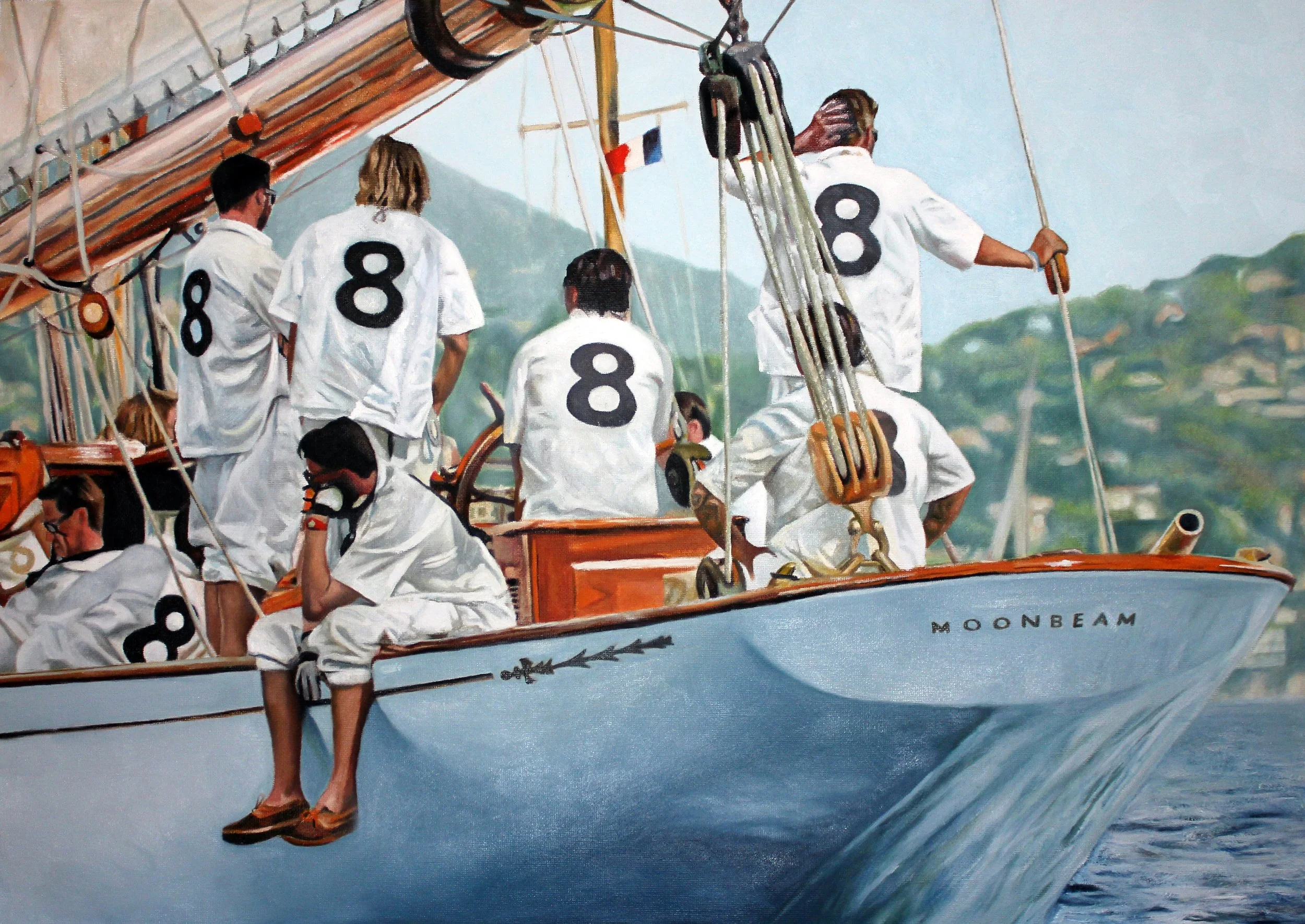
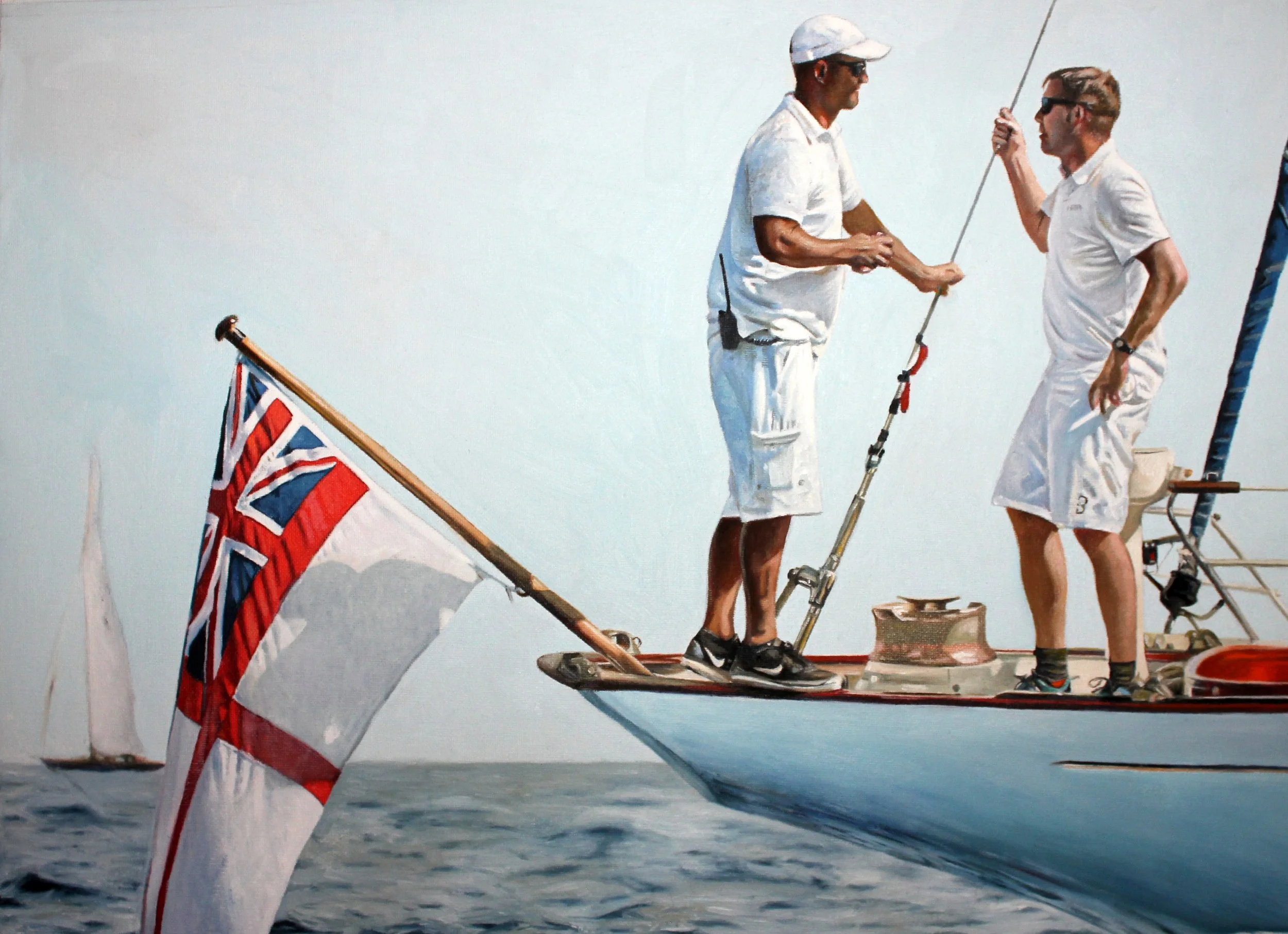
For years I photographed the classic sailing boats around Saint-Tropez, often heading out alone on my RIB, sometimes finding myself far farther out at sea than planned. I captured everything from the quiet stillness before a race,those moments of waiting for the wind, to the explosive action of boats carving through heavy rollers, crews scrambling in unison. The paintings were meant to feel the same way: quick, direct, made in the moment. Alla prima, loose brushwork, yet always holding onto the light and the magic.
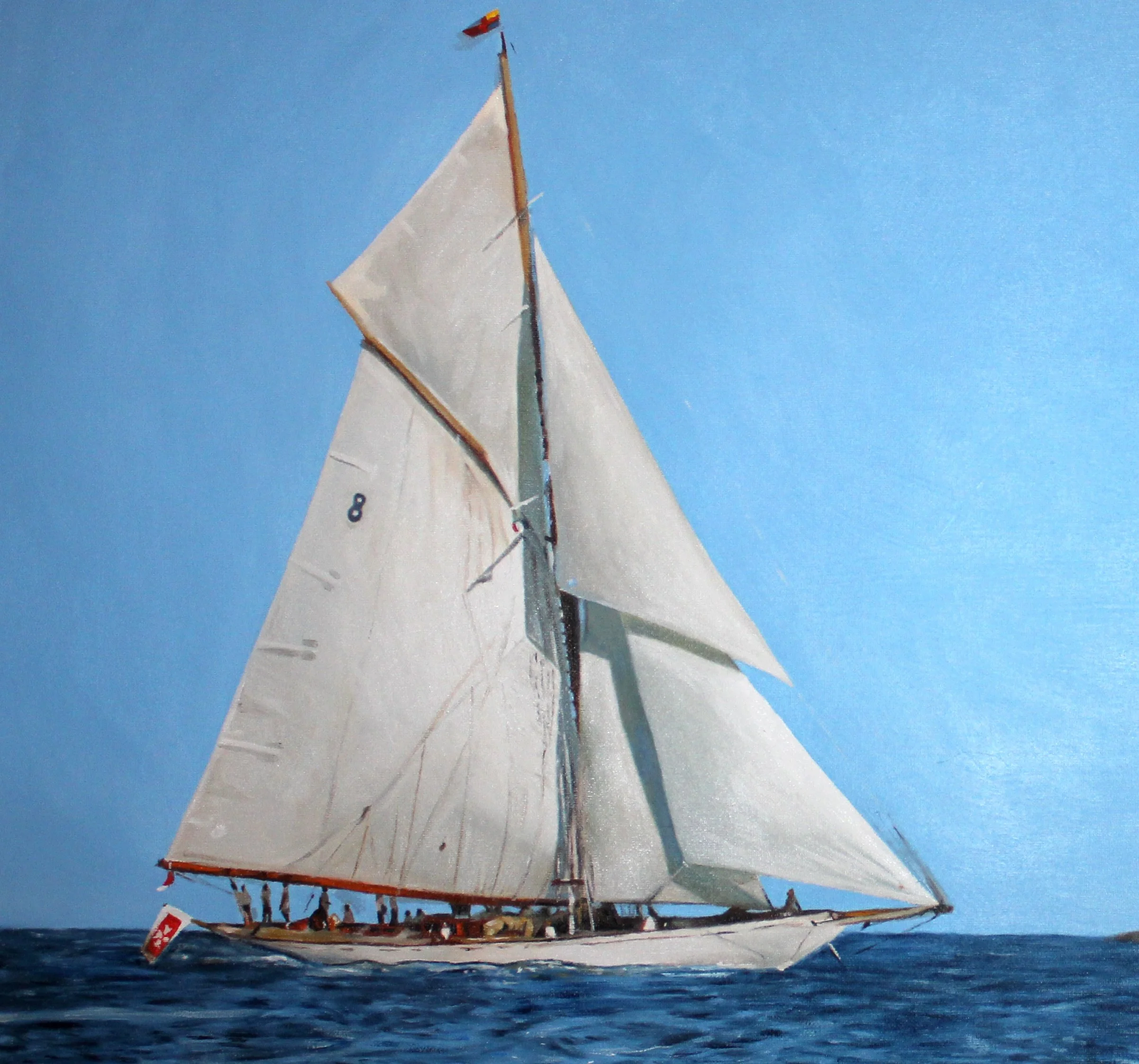
After living in Saint-Tropez for more than fifteen years, the water became an essential part of my life. I was especially drawn to the old classic sailing yachts, many built in the 1920s, many in Fife. Some had been left to decay, only to be found and restored to their former glory, not simply as beautiful objects but as magnificent working vessels with rich histories. One, for instance, was Manitou, once owned by JFK.
Every September, Les Voiles de Saint-Tropez unfolded practically in my backyard. With my camera and RIB, I ventured out to capture scenes ranging from quiet pre-race anticipation to the drama of open water, towering waves, pounding wind, and these extraordinary boats driving forward with unbelievable force. I witnessed everything from serene light to masts snapping in two.
To paint this world, I had to adapt my technique. The subjects were too fast, too alive, too full for the traditional method of detailed underpainting and slow, glazed layers. Instead, I embraced a looser approach, painting alla prima, wet-into-wet, to match the immediacy and power of the scenes themselves. The paintings needed to move quickly, just like the boats they depict.